
🔄 Cập nhật lần cuối: 08/10/26
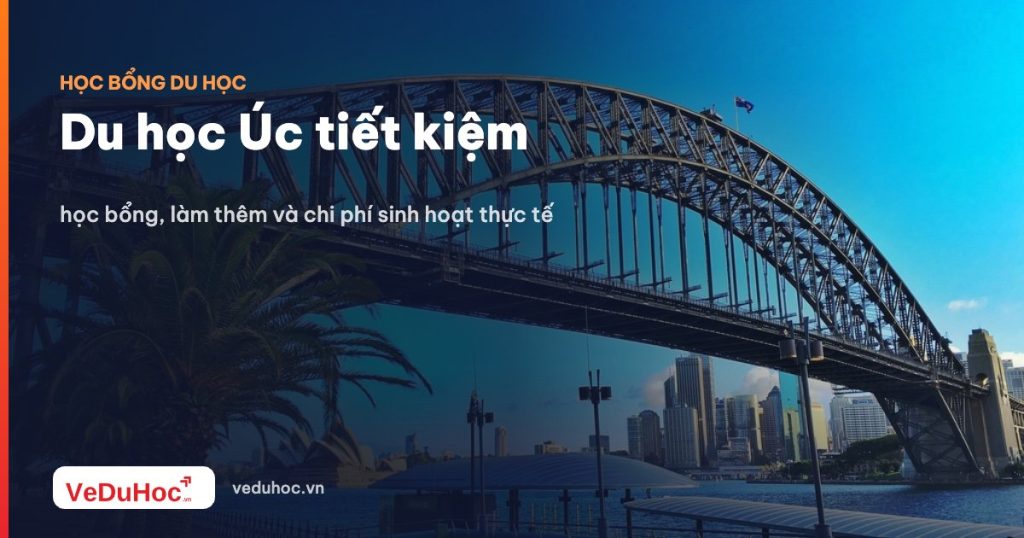
Australia is often classified as a high-cost destination, but studying abroad in Australia on a budget is completely feasible if you have a strategy from the beginning. The secret lies in three factors: reducing tuition fees with scholarships, creating legitimate income with part-time jobs, and controlling living costs. This article helps you understand each item and create a realistic budget.
Expenses when studying in Australia
Total costs include two large groups: study costs and living costs.
- Tuition: varies significantly by level, major and school. Medical and engineering majors are often higher than business and social majors.
- OSHC health insurance: mandatory throughout the student visa period.
- Visa fees: Australian student visa application fees have increased sharply in recent years; Check current levels on the Australian Department of Home Affairs website.
- Living expenses: housing, meals, transportation, electricity and water, internet, books, entertainment.
- One-time costs: airfare, housing deposit, purchase of initial supplies.
Regarding living expenses, the Australian Department of Home Affairs stipulates the minimum amount of money students must prove when applying for a visa. From May 10, 2024, this level is 29,710 AUD/year for the main applicant (according to the announcement compiled by Navitas). This level can be adjusted, and actual costs in Sydney and Melbourne are often higher than smaller cities. See more comparison table in the article Cost of studying abroad in other countries.
Reduce tuition fees with scholarships

Tuition is the largest expense, so scholarships have the strongest impact on the total budget:
- Australian Government Awards Scholarships: Full tuition, for graduate level, requires work experience and commitment to return home. Details at Australia Awards scholarships to study abroad in Australia.
- School scholarships: often reduce a portion of tuition fees, many scholarships are automatically considered based on points.
- Regional scholarships: some states and schools in regional areas have their own support policies; The cost of living here is also lower.
- Preparatory and high school scholarships: see Scholarships to study in Australia at high school and preparatory levels.
| Strategy | Impact | Note |
|---|---|---|
| Tuition reduction scholarships | Reduce your biggest expenses | Check renewal conditions every year |
| Study in a regional city | Reduce housing and travel costs | Fewer part-time jobs than big cities |
| Legal part-time work | Compensate part of living expenses | Cannot be used as a substitute for financial proof |
| Housing sharing | Significantly reduced rent | Sign a clear contract, avoid deposit scams |
Working part-time while studying in Australia: regulations and notes
According to information from the Australian Universities Admissions Center (UAC), international students are allowed to work a maximum of 48 hours per fortnight during their studies, and unlimited hours during official course breaks. This regulation is subject to change, so please check your visa conditions on the Home Office page.
- Only do it once you have started the course and always keep track of the hours.
- Be paid according to Australian labor law: international students have the same rights as other workers; The Fair Work Ombudsman is where you can help if you are underpaid.
- Have a tax code (TFN) and a bank account in your name.
- Don't let your job affect your grades: risk losing your scholarship or violating your academic progress.
Part-time income should be considered living compensation, not the main source to pay tuition. Read more Part-time work while studying abroad: hour limit and salary.
Tips for studying in Australia to save on living costs
Housing
Rent a house together, choose a suburb with a train station, compare dormitories and homestays. Reference Find housing while studying abroad.
Eating and drinking
Cook at home, buy at discounts at supermarkets and end-of-day markets. Cooking is the most obvious way to save money compared to eating out.
Travel
Many states have preferential transportation cards for students, but eligibility for international students varies by state. Ask the school when enrolling.
Airline tickets
Airfare and return visits home are a significant sum. Book early, avoid the Tet and summer rush, and consider one-way or round-trip tickets depending on your plans.
In addition, post 15 ways to reduce the cost of studying abroad There are more tips that apply in Australia.
Frequently asked questions
Is working part-time enough to cover living expenses in Australia?
With a limit of 48 hours/2 weeks during the semester, part-time income can offset a significant portion of living expenses, but it is difficult to fully cover the entire amount, especially in big cities. Do not rely on part-time work to pay tuition.
Which city in Australia has a lower cost of living?
In general, cities such as Adelaide, Hobart, Perth or regional areas have lower rent than Sydney and Melbourne. However costs change over time, please check for updated figures.
Can part-time income be used to prove finances?
Are not. Visa documents require proof of available financial resources before departure, excluding expected income from part-time work.
Conclusion
Studying abroad in Australia economically is a combined problem: scholarships to reduce tuition fees, legal part-time work to offset living expenses, and a smart spending lifestyle. Planning early and sticking to official figures is key. When you are ready to fly, VeDuHoc supports you via hotline/Zalo 090.1800.918.
Reference source
Booker HVSC gives a free quote in 15 minutes, Zalo reports take-off and landing for the whole family.
📚 Articles on the same topic
 Documents & student visaAustralian student visa (subclass 500): conditions, GTE/GS and documents04/08/26 · 7 phút đọc
 Study abroad scholarshipBusiness, economics, MBA scholarships: criteria and experience23/04/26 · 6 phút đọc
 Study abroad scholarshipIELTS, TOEFL, Duolingo: which English certificate to choose to apply for a scholarship15/12/25 · 6 phút đọc
 Study abroad scholarshipRetaining a scholarship throughout the course: retention conditions and risks of termination20/11/25 · 6 phút đọc
 Study abroad scholarshipScholarships for STEM majors: great opportunity for engineering and technology students14/07/25 · 6 phút đọc
 Study abroad lifeWorking part-time while studying abroad: hour limits, salary and legal notes18/06/25 · 6 phút đọc
🔥 Read a lot
- International checked baggage for international students: pieces or scales, 46kg and tips for packing suitcases
- Master's scholarships: strategies for choosing majors, choosing schools and contacting professors
- Why should study abroad centers have specialized airline ticket partners?
- Choosing a reputable dispatching company: signs to recognize and avoid scams
- Stipendium Hungaricum Scholarship: full study abroad in Hungary





 ▶
▶ ▶
▶ ▶
▶ ▶
▶ ▶
▶ ▶
▶ ▶
▶